


17 October 2022
My thought this week is again a continuation of what I was talking to you about last week in terms of anger, but this week I want to focus on the subject of self-control.
Not being able to control anger is the biggest cause of arguments and upset in people’s lives. If you let yourself get angry, it is not only extremely destructive and affects you negatively, but it can also negatively affect other people who experience it from you, particularly children.
Even if your anger is not directed at them and simply comes from your own frustration with yourself that you have done something wrong, or cannot do something, others can still genuinely think that it is really about them, no matter how hard you try to subsequently convince them otherwise!
Others, particularly children, can carry around scars from your anger, not only for a short time after an outburst, but also for days, weeks, months, years, or decades afterwards, even if you calm down quickly and think nothing of it. And even for a lifetime, if experienced by a child.
It is all about self-control, as when you feel yourself getting angry, you must not say or do anything until the anger building inside starts subsiding. It may take only seconds or minutes, but it can also take hours, weeks, months, years and even decades or a lifetime!
You also have to practice self-control to get good at it. It doesn’t just happen. A good example of having developed self-control is through identifying traits that you do not like in other people, but then being able to resist the temptation to criticise them, even though you want to!
It also takes a lot of self-control and patience not to respond sometimes to someone if you want to say something in your mind, but you know that you should not say it out loud. Doing this will often usually only start a vicious cycle of blame anyway sometimes.
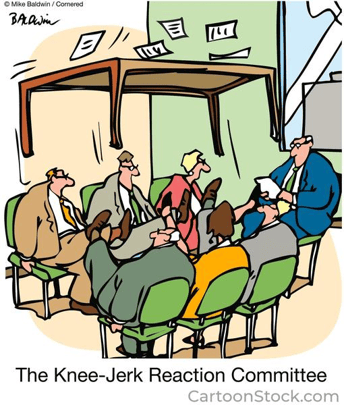
And do not just react to things in a knee-jerk way. A lot of things that influence the way we react to things are deep-rooted, so we are unconscious of them. We therefore need to surface things to our consciousness to see them if we want to change them.
Finally, sometimes, as hard as it is, remember that it is better not to respond to someone if provoked, although you can acknowledge what they have said, in order to stop them worrying that you haven’t heard them and thereby letting an already difficult situation get more out of hand.
So, this week, start practicing and exercising self-control whenever and whenever you can and try to stop yourself from reacting to things that happen or to what other people say or do in a knee-jerk way. It becomes easier over time!
 🤔 Think Again