


31 October 2022
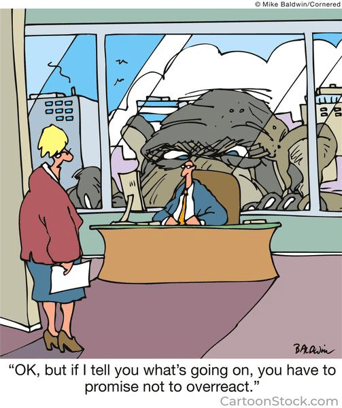
This week, I want to continue talking to you about logic and emotion. But this week I want to concentrate on emotion, particularly our emotional responses. And this week, I want to talk about learning how to train emotions, so that you control them, rather than letting them control you!
There is no one agreed definition of emotion. For example, emotion is sometimes said to be a strong feeling, deriving from one’s circumstances, mood, or relationships with others. However, emotion is also said to be mental states brought on by neurophysiological changes, variously associated with thoughts, feelings, behaviour and pleasure.
Emotional responses are reactions that humans experience in response to events or situations. The type of emotion a person experiences is determined by the circumstances that triggers their emotion. For example, a person experiences joy when they receive good news, but experiences fear when they feel frightened or threatened.
Viktor Frankl, the famous psychiatrist and founder of the discipline of ‘Logotherapy’ is quoted though as saying that: “Between stimulus and response there is a space. In that space is our power to choose our response. In our response lies our growth and our freedom.”
Your emotions always dictate how you respond to things. But it is too easy to say to yourself or others that, whilst you can train your logic to learn new things, you cannot train your emotions in the same way, because emotional responses are innate, so out of your control.
However, this is just not true! Our emotional responses are not pre-determined, they are a choice. This means that, logically (although I know that we are focusing this week on ‘emotion’ and not ‘logic’), you choose how you respond to anything, which means that you can train your emotional responses.
Remember also that your first knee-jerk response to anything is always an emotional reaction. Whilst emotions can be good sometimes, like a gut-instinct that guides us, too often they found not just a reaction, but an overreaction, which traps us and sometimes makes a bad situation even worse for us.
Therefore, try to train your emotions, so that they are a reaction and not an overreaction. Don’t respond to something too quickly. It is sometimes better to not respond until you think through the implications of the different ways that you can respond. Then choose the least damaging way.
Finally, being first is not always best. Remember the phrase: “Less haste, more speed”, which means that the faster you do something, the more likely you are to make mistakes, which then makes everything worse. Whilst usually applied to situations concerning time, it works as well when applied to emotions.
So, this week, try to train your emotions before you have to respond to something. I know that we live in the real world though, where there is not always time to think before responding. But this is then even more reason why training emotions beforehand will help you ultimately!
 🤔 Think Again