


14 November 2022
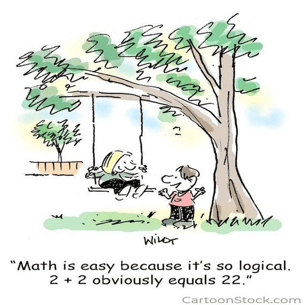
Recently I talked about the difference between logic and emotion and explained to you about how you can train your emotions. But this week, I want to focus on logic and tell you now why you should probably usually apply your logic and not your emotion when making decisions.
Logic is defined in many ways; for example, simply as the relaxed study of correct reasoning, or more complexly, as reasoning according to strict principles of validity or deduction. Logic also draws on experiences and personal experiences are often a better guide to you than any form of deductive logic.
Either way, logic encompasses both formal and informal logic. Formal logic is the science of deductive inferences, logical truths and a formal science investigating how conclusions follow from premises and proofs, which contrasts with informal logic, which is usually based on critical thinking and argument.
There is no agreement on how formal and informal logic can be distinguished from one another, as logic plays such a dominant role in so many fields of discipline, ranging from science and mathematics, to philosophy and languages, which are often said to be using both formal and informal logic.
However, it is still important to usually make decisions based on data and logic, rather than emotion and gut instinct, which can be very wrong sometimes. People also get too emotionally attached to things, such as past experiences, or things that stop them making decisions that they need to make.
The trick with logic is to learn to use both formal and informal logic and also be creative sometimes, using both your brain and mind when looking at a problem. The answer is then usually a synthesis between different and perhaps opposite answers that you get.
This answer is not a compromise, but often the best solution. We have to train ourselves though to apply all of the evidence properly. A bit of emotion is good sometimes to guide you towards any decision, but most of the time you need to think about things more logically.
But be careful, if you find yourself claiming that your conclusion is the only logical or rational one, it is usually then actually a questionable one, because otherwise you would not need to claim to others or yourself that it was a logical or rational one!
Finally, remember also that beliefs are also sometimes irrational and we sometimes think things are logical, because we want to believe that something is true. You can also be seriously misled by common beliefs, or too easily influenced by others. Additionally, optimism is not always rational or logical.
So, this week, use both formal and informal logic and think through as many of the potential consequences of a decision, wherever possible, before you make it. Also, try to always apply your logic and not emotion when looking at things.
 🤔 Think Again