


20 June 2022
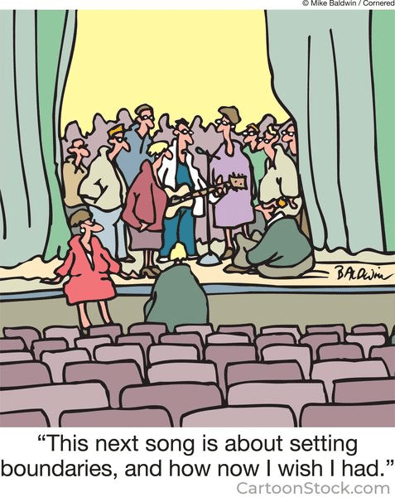
There are no boundaries anymore, are there? Whether boundaries between personal lives and working lives, which people call the ‘work-life balance’, or boundaries in the way that we view time and give it to others. As we find it difficult to put boundaries in, we often find ourselves thinking about work when we should be relaxing, or thinking about relaxing when we should be working!
Boundaries are very important and should always be remembered and not be forgotten, especially in the inter-connected and global world that we now live in. It is important for me to point out here that there is a real difference – ‘remembering’ is conscious and a positive action, whereas ‘forgetting’ is unconscious and a negative action, which you can do without positively doing something.
We need to learn to put boundaries around things, so that we know when we are supposed to be working and when we are supposed to be relaxing. Remember the phrase: ‘Work hard, play hard’. Working and relaxing also go together like working hard and playing hard. We also need to learn how to find joy in our work, as well as find joy if we are relaxing and enjoying time off from work.
Believe it or not, it is all about having ‘respect’, both respect for ourselves and respect for others. First, respect for ourselves to maintain boundaries for the important things in our lives, such as family, friends, personal time, as well as our work. What we do for work should also not define us as a person – we are more than what we do to make a living. As people say, you work to live, not live to work!
But we must also respect others – we seem to have forgotten how to respect and value other people’s time too. For example, there is no point spending time with someone if we are not ‘all there’ – that is disrespectful to them. We must also try to ensure that we are not late for things, so then waste other people’s time, or think that it is somehow worth less than ours. That is also very disrespectful to them.
And remember how I always like to point out that we can really only do one thing well at a time. The same principle applies here. We must focus on what we are spending our time on, almost to the exclusion of everything else at the time (barring emergencies), so that we can give what we are doing our ‘all’ and then be as productive and effective with something as we can be when doing it.
The most amusing thing about this is that, if you take this further, you realise that if you carve out time in your day for something that you normally think of as unproductive or ineffective, say watching YouTube or Netflix, or doing something else that initially seems to be wasting time, you are actually being productive and effective, as you intended to do that, so are positively doing an action!
But it doesn’t just happen. You have to do it again and again and practice it for it to work properly, so that you get better at it as you go along. And the more you do anything, including relaxing, the more natural it will feel to you. Leisure time should feel like leisure time and not just time away from work.
You are actually trying to achieve something, so you may need to do something that you feel is mindless.
Finally, you also need to do something different. I heard somebody say once that, if you work with your head, you need to rest with your hands and vice versa; so you often need to do something more practical and physical in order to relax if your work includes a lot of thinking and vice versa. Also, remember that results are not everything, so don’t be too impatient to relax – it takes time.
So, this week, try to think about putting boundaries of time around things that you do, both for yourself and also for other people, so that both you and they will clearly know if and when you are doing one thing or another. You may be surprised at how much more relaxed and less guilty you feel about doing something now!
 🤔 Think Again