


27/3/2023
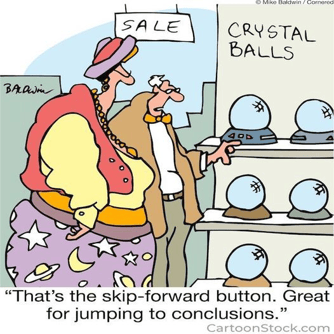
This week I want to talk about trying to predict people’s future behaviour. Not so easy, but also not so hard! I’ll be more theoretical this week, as I want to give you principles to think about and use in your everyday life and I know that everyone is different.
Predicting behaviour has always been a fascination for humans. With the advance of technology, predicting is now more science than art and seems more accurate. But human behaviour is also notoriously difficult to predict, as it is influenced by many factors, including culture and upbringing.
Predicting human behaviour is also a complex process that requires analysis of various things and should be used with caution, as it is not always entirely accurate. There are always countless variables at play and another issue that arises is the possibility of unforeseen events.
One popular way of predicting wider future behaviour is through ‘Big Data’ analysis, now used in many industries, like finance, healthcare, retail, and education. Predictions based on data analysis can help individuals and businesses make better decisions.
But we should also look individually at ‘Small Data’ and the patterns of people’s behaviour who are closer around us. A good example of spotting a pattern in behaviour is where you find yourself looking at somebody and saying to yourself that they “always do that” or “never do that”!
But there is also an irony here, because if you somehow let on to somebody that you have spotted a pattern of behaviour in them, they usually change it, or even do the opposite, which then makes their future behaviour much harder for you to identify.
And, even without you doing this, people can sometimes ‘play’ you, by distracting you and making you focus your attention elsewhere, so you then imagine things differently. Think of how a pick-pocket distracts his or her victim by focusing their attention elsewhere, whilst they pick their pocket.
Despite these challenges, we still try to make predictions about people’s future behaviour, because it is a natural human tendency to want to know what people may do in the future. Predicting future behaviour can also be useful in helping us prepare for potential scenarios or make better decisions.
Finally, it’s important to remember that they are never any guarantees and that someone’s future behaviour always remains uncertain. While predictions can be useful, it’s important to take them with a grain of salt and approach them with a healthy dose of skepticism.
So, this week, remember that predicting human behaviour is always useful practically, if you spot a pattern of behaviour! Nonetheless, remember also that prediction is not foolproof and can be influenced by biases and inaccuracies, so be cautious and always manage your expectations!
 🤔 Think Again