


17/4/2023
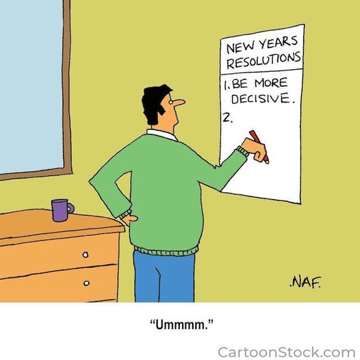
This week I want to talk to you about a concept called: ‘decision fatigue’, where we become unconsciously very tired everyday, without even realising it, from having to make decisions constantly. It is also caused by the impact of information overload, or where we feel that we have conflicting priorities.
Decision fatigue describes the mental exhaustion that occurs when a person has to make too many decisions. It is caused by the psychological stress of making decisions, as well as the physical strain of the body’s natural response to stress. It can therefore be extremely detrimental to overall well-being.
Decision fatigue leads to poor decision-making, due to lack of mental energy caused by having to make endless decisions. It affects everyone and usually manifests through difficulty focusing or remembering details, increased irritability, negative thinking, decreased motivation and lowered productivity. It also includes emotions, like feeling restlessness and overwhelmed.
It actually helps to look at this more scientifically as well. The human mind is a very complex system and influenced by various factors. One of the most significant factors that impact decision-making is fatigue. When tired, we are less attentive, less focused and less able to make rational decisions.
This is because fatigue affects the parts of the brain responsible for decision-making, judgment and impulse control. Fatigue also affects the prefrontal cortex and, when we’re tired, this area of the brain becomes less active, which leads to more impulsive and risky decisions, in both physical and mental decision-making tasks.
And in addition to the prefrontal cortex, another part of the brain, the amygdala, is responsible for processing emotions and can become more active when we’re tired. This can also lead to heightened emotional responses and additionally a greater willingness to take risks.
But it’s not just a lack of sleep that leads to fatigue and risky decision-making. Stress and anxiety also contribute. In fact, even mild fatigue impacts decision-making. It’s therefore important to prioritise rest and stress management, to ensure our decisions are based on sound judgment and not influenced by fatigue.
Ways to combat decision fatigue, include avoiding making important decisions when we’re tired and waiting until we’re well-rested and more alert. Taking breaks, getting regular exercise and practicing stress-reducing techniques also help. Additionally, it is helpful to simplify decision-making processes, breaking up large tasks into smaller, more manageable tasks.
Finally, realise that decision fatigue has serious consequences on personal wellbeing and productivity. It’s therefore really important to understand it, recognise warning signs early and try to prevent it. It’s also important to create routines and stick with them, as having routines helps alleviate some of the stress of decision-making.
So, this week, remember that, although ‘decision fatigue is a real phenomenon, by simplifying the decision-making process, creating routines, and taking regular breaks, it can be effectively managed!”
 🤔 Think Again