


26/6/2023
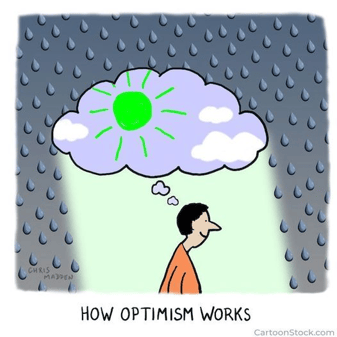
This week I want to talk about ’Optimism Bias’, the psychological phenomenon that often causes individuals to overestimate the likelihood of positive outcomes, while at the same time, underestimating the likelihood of negatives aspects of any situation.
Optimism bias is often referred to as the “rose-coloured glasses effect”. It is prevalent in many aspects of our everyday life. It often causes people to take risks without properly assessing potential consequences, leading to poor decision-making and poor outcomes.
One of the reasons for it is the human brain’s tendency to seek out positive information, whilst ignoring negative information. For example, someone may only look for positive news that they want to see, rather than negative things that may affect any choice.
But I see optimism bias very differently and actually as a good thing! Staying optimistic is, in fact, often a powerful tool that many successful people use. Rather than giving up at the first sign of difficulty, they persevere, believing that they will eventually succeed!
By believing in the power of positivity, people often are able to overcome obstacles and push through challenging situations that may otherwise deter them. Those who feel that things will always work out are also more resilient and able to handle setbacks in life.
When you truly believe that things will always work out for you in the end and that they always do, you also then start to realise that there is absolutely no point in you wasting your time worrying about things that may or may not happen.
Let me take this a bit further. Anxiety and stress often hinders many people, making them feel overwhelmed, anxious and unable to focus on tasks ahead of them. Worrying about the future is also a constant source of stress and anxiety that eats away at people.
However, being optimistic reduces anxiety and stress. Those who focus on the present and only on what they can do and control now, usually tackle obstacles head-on, increase productivity and effectiveness and don’t waste their time worrying about the future.
But be careful, the downside of optimism bias is that it may lead to complacency, unrealistic expectations or disappointment. Overconfidence can also lead to lack of preparation. Additionally, blind optimism can sometimes make it difficult to see potential problems.
So, this week, try to truly believe that things will always work out for you in the end in whatever you do, focus on the present moment and take control of the things that you can control. By adopting the optimism bias mindset, you too can achieve great things in life!
 🤔 Think Again