


25th March 2024
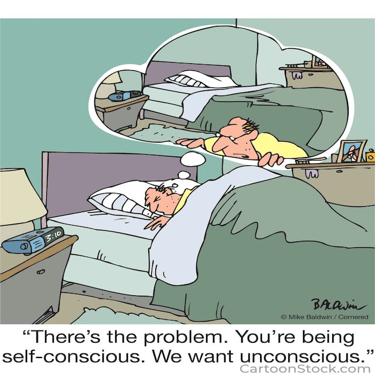
This week, I want to talk to you about how you can sometimes solve problems unconsciously by not actually directly thinking about them! I know this probably sounds a bit daft at first, but please hear me out, as I hope that some of what I say will make sense to you.
Have you ever found yourself struggling to solve a problem, only to then realise that the solution you were looking for, suddenly becomes clear to you when you least expect it to? This phenomenon is known as unconscious problem-solving and is a fascinating aspect of our brain’s capabilities.
Unconscious problem-solving refers to the process in which the brain continues to work on a problem, even though we are not actively thinking about it. It is always a subconscious process that takes place in the background, without our conscious awareness.
Research has shown that our brains constantly process information, even when we are not consciously focused on a task. This processing occurs in various regions of the brain, which then work together to analyse and make connections between different pieces of information.
An interesting example of unconscious problem-solving is the phenomenon known as the “Eureka” moment. This is when a sudden insight or solution to a problem pops into our mind seemingly out of nowhere. Many great scientific discoveries and inventions were made through these sudden bursts of insight.
A classic example is Archimedes, an ancient Greek mathematician who struggled to determine the volume of an irregularly shaped object. After days of unsuccessful attempts, he stepped into his bathtub and noticed the water level rising, then realised that water displacement could be used to measure irregularly shaped objects.
Unconscious problem-solving can also be observed in many creative endeavours, such as writing, painting, or composing music. Artists will often report experiencing moments of inspiration and clarity that emerge after periods of intense work, or even during moments of relaxation.
So, how can you tap into the power of unconscious problem-solving?
I would usually say now that I will give examples of thinking subconsciously next week. But I realise that some people are off at the end of this week for the Easter break and I will also not send a thought during this time, as I also take a break.
So, I will bring you the second part of this thought tomorrow to give you examples of subconscious thinking!
 🤔 Think Again