


19 April 2022
This week I want to continue talking about ‘The Backfire Effect’, as there are still some other things that I want to say. If you haven’t already done so, I strongly encourage you to first read my thought from last week, which you can do here, as I will be building on what I said there.
After reading what I said previously, ‘The Backfire Effect’ may now seem fairly straightforward. In essence, it means that the more that you try to get your point across to someone who has a different viewpoint, the more that it will just backfire. Or the more that you tell somebody to do something, the less likely they will do it.
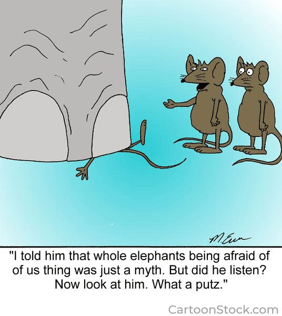
However, there is also something else referred to as the ‘Overkill Backfire Effect’! This is where people reject a more complex explanation about something, in favour of a simpler alternative. A good example is how people tend to believe a simple myth, rather than a detailed or overly technical argument that says that it is wrong.
A further example is the ‘Familiarity Backfire Effect’ which is another cognitive bias. It says that people remember misinformation better and think that it is true, with increased exposure to that misinformation. This is also known as ‘Belief Perseverance’, since you maintain your original belief, despite new information that contradicts it.
Overall, no matter what you call it, ‘The Backfire Effect’ is confirmation bias and especially stronger in people who refuse to even consider the possibility that they may be mistaken. Also, if someone perceives you as hostile, they even more doubt the validity of your arguments, even rational ones.
Telling them that they are wrong is also unlikely to work, as it puts them into a different mindset where they will not accept new thinking anyway.
You also should always choose your words carefully. For example, try not to tell somebody that they are wrong, but instead try to tell them that they are not right. I know that this sounds silly, but this does make a difference. If you tell somebody that they are wrong, they feel criticised, become defensive and quickly look for a way to rationalise things, to ensure that their initial belief remains intact. One way is to make that belief stronger if they can. Remember, we try to make sense to ourselves of things that we think or do.
But be cautious if somebody is absolutist, as you are usually just wasting your time and energy if trying to convince them otherwise, as they will not change their mind, especially if feeling that you are trying to change it. Yet if somebody is potentially willing to change their view, you must also recognise that this is incredibly hard for them, as they are effectively admitting that they were wrong before. If they perceive you as gloating in some way, they feel under attack again, so more strongly think or do the opposite.
People unconsciously look for ways to use pre-existing knowledge in their arguments. So, if you challenge somebody’s beliefs, you often find that they actually end up with more arguments to support their stance and believe then that they have now more proof to support their view than before! Even if we think that somebody will see the errors of their ways when we present evidence which challenges their belief, it usually has the opposite effect and only makes them double-down on what they were thinking before.
Finally, if you think that the other person has got your point, remember to leave it there. Do not repeat it, expand upon it or try to press it home. Like I said last week, if you challenge somebody’s thinking, they feel threatened, as their beliefs are crucial to their self-concept. So, don’t over-egg it and know when to stop. Saying too much is often worse than saying too little in this situation. Also remember that it could be you that could be wrong and they could be right!
So, this week, if you want to change somebody’s mind about something,
remember that you need to make your message simple and clear and try not to force your point repeatedly, otherwise it will backfire. Also, see whether you can change the way in which you communicate to people that they may not be right about something – you may be surprised at the difference in the way that they react.
And try not to be absolutist!
 🤔 Think Again